Search “interior design styles” and you’ll land on hundreds of pages built by editorial sites and stock-photo galleries, most of them describing looks nobody actually lives in. Lisa Miller has spent thirty years building and designing real homes across a genuinely wide range of styles, from a working ranch featured in American Farmhouse Style magazine to coastal Sarasota residences, so this guide comes from projects that exist, not a mood board assembled for search traffic.
Most interior designers gravitate toward one look and build a whole practice around it. Lisa’s construction background works differently: once you understand how a house is actually built, walls, wiring, load paths, you can execute almost any style well, because the hard part was never the aesthetic, it was making the underlying structure support it. That range is why her portfolio includes farmhouse kitchens, coastal living rooms, and rustic cabins that all hold up under the same construction-first process, and why this guide covers eight distinct styles instead of the two or three most designers actually know well.
This guide covers eight major residential styles in enough depth to help you name what you’re drawn to, plus how to think about mixing styles, matching a style to your home’s existing architecture, and where dedicated deep-dive guides on specific styles are headed next on this blog.
How to Identify Your Interior Design Style
Start with how a room should feel rather than what it should look like. Words like “calm,” “collected,” “warm,” or “clean” point toward different style families faster than browsing a hundred photos on a design app, and a good designer translates that feeling into materials, color, and furniture shape before a single item gets ordered. Someone who says a room should feel “settled” is usually describing traditional or old world instincts, while “fresh” or “light” points toward coastal or contemporary.
Pay attention to what you’re already drawn to outside your home. The restaurants you like, the vacation photos you keep, and the clothes you actually wear all carry the same material and color instincts that belong in your house. Someone who loves worn leather, linen, and natural wood is describing rustic or farmhouse leanings, whether they know the term or not, and someone who keeps saving photos of white sand and driftwood is telling you almost everything you need to know about their coastal preferences.
Notice what you’re avoiding as much as what you like. Homeowners who say “not too matchy” or “nothing that feels like a hotel” are ruling out entire style families just as usefully as naming one they love, and a designer who listens for the negative space in a brief gets the room right faster than one who only asks what you want. “Nothing too formal” usually rules out traditional. “Nothing too stark” usually rules out contemporary.
Consider your tolerance for upkeep, especially in Florida’s climate. Light linen slipcovers and reclaimed wood photograph beautifully but need more attention in a humid coastal environment than a durable, tightly upholstered contemporary piece. Being honest about how much maintenance you actually want to do changes which styles are realistic, not just which ones you like in a photo.
Major Interior Design Styles, Explained
With that framework in mind, here’s how the major residential interior design styles actually differ, and where each one shows up in real, built homes rather than a showroom floor.
Modern Farmhouse
Modern farmhouse blends the warmth of traditional farmhouse materials, shiplap, wood beams, and a neutral palette, with cleaner, more contemporary lines than the original country look. Color palettes stay tight: whites, creams, and warm grays, with black metal fixtures as the main accent.
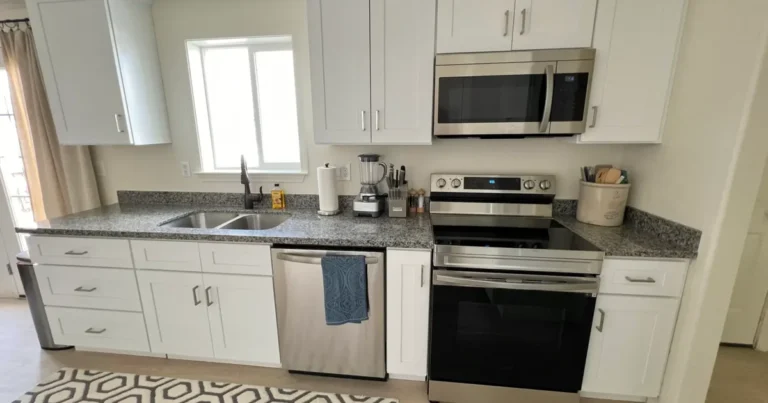
Lisa’s own Miller Time Ranch project, featured in American Farmhouse Style magazine, is a working example rather than a styled photo shoot: a real ranch home where reclaimed wood, black metal fixtures, and a mostly white-and-cream palette meet furniture with none of the ornate detailing you’d find in a classic country home. The style photographs well specifically because it’s built to be lived in hard, which matters if you’re raising a family or actually running a property rather than staging one. It’s best suited to homeowners who want warmth without clutter, and who are willing to keep their accessories edited rather than layered.
Farmhouse and Country
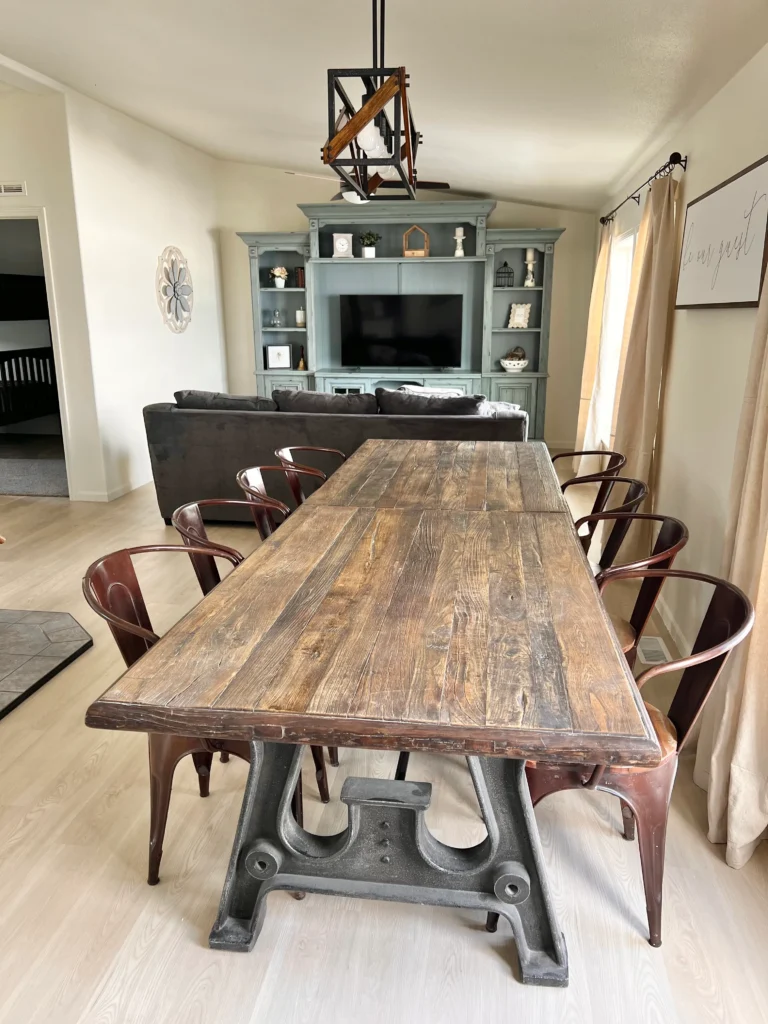
Classic farmhouse and country style lean warmer and more layered than its modern cousin: florals, gingham, antique furniture, and a collected-over-decades feel rather than a curated one. Where modern farmhouse edits down, country style embraces more pattern and more history in the same room.
Lisa’s Country Remodel project shows this end of the spectrum, an existing home updated with an emphasis on comfort and character over showroom polish. Country style works especially well in renovations where the house already has some age and history to draw from, since forcing brand-new farmhouse materials into a house that’s been lived in for fifty years tends to read as costume rather than character. It’s the right choice for homeowners who want a home that looks like it’s always belonged to their family, even if they just bought it.
Coastal
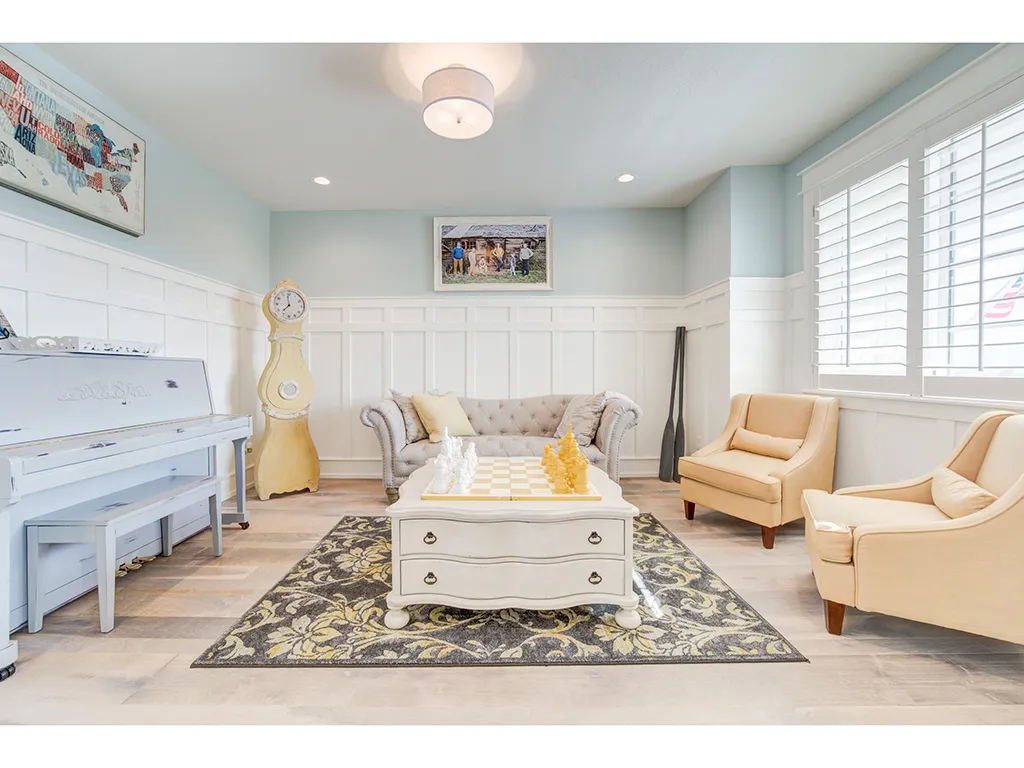
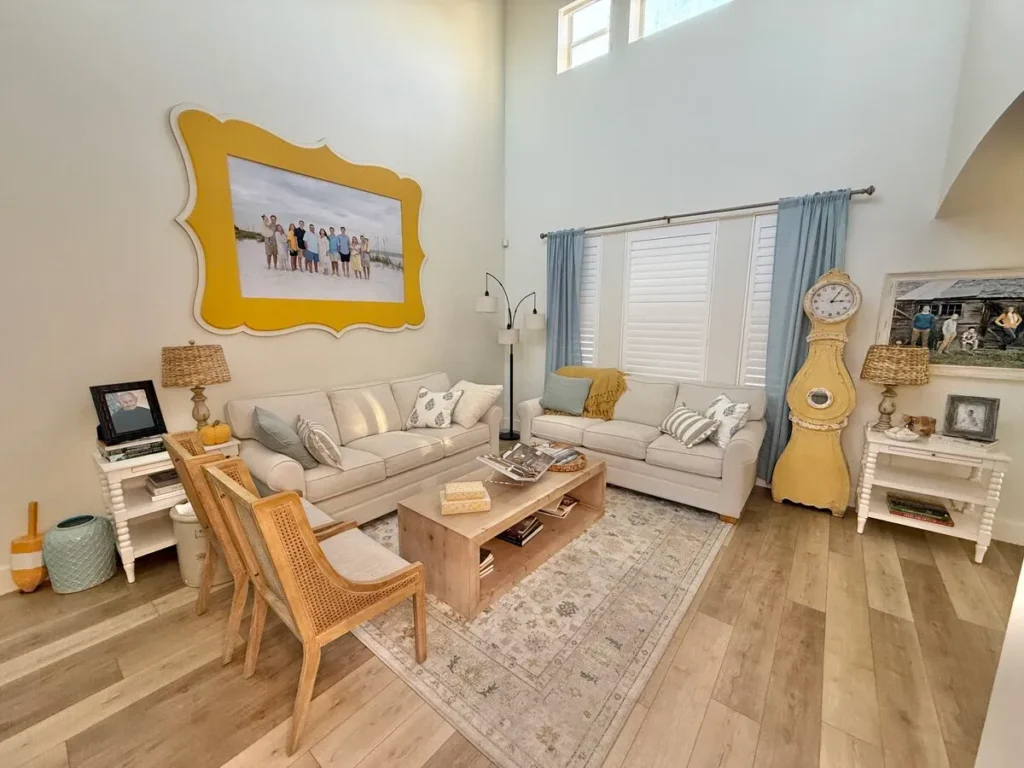
Coastal design gets reduced to “beach house” more often than any other style, but done well it has almost nothing to do with anchors and seashells. Think light, breathable materials, a palette pulled from sand and water rather than primary blue, and furniture that can handle humidity and sun exposure without falling apart in three years, which matters more in actual Florida homes than in the version of coastal design shown in national magazines shot on the Cape.
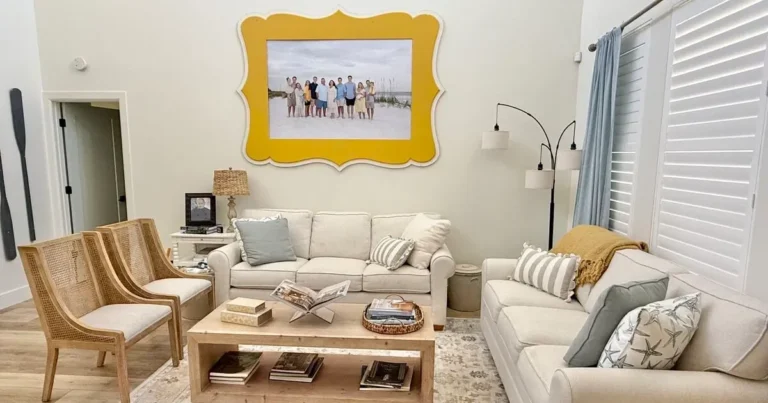
Two of Lisa’s projects, Coastal Craftsman and Florida Coastal, show how differently this style can read depending on the architecture underneath it. A craftsman-style coastal home carries more wood detailing and a slightly more grounded palette, while a true Florida coastal build leans lighter and airier, closer to what people picture when they say “beach house” without meaning the theme-park version. Coastal is the right fit for homeowners who spend real time outdoors and want their interior to feel like an extension of that, not a departure from it.
Transitional
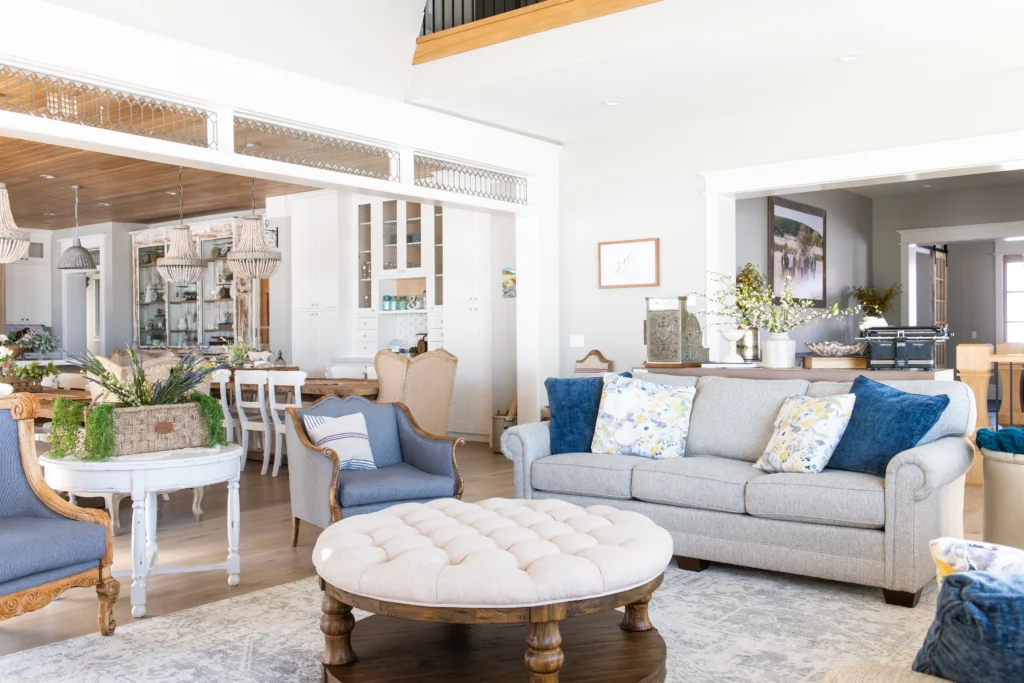
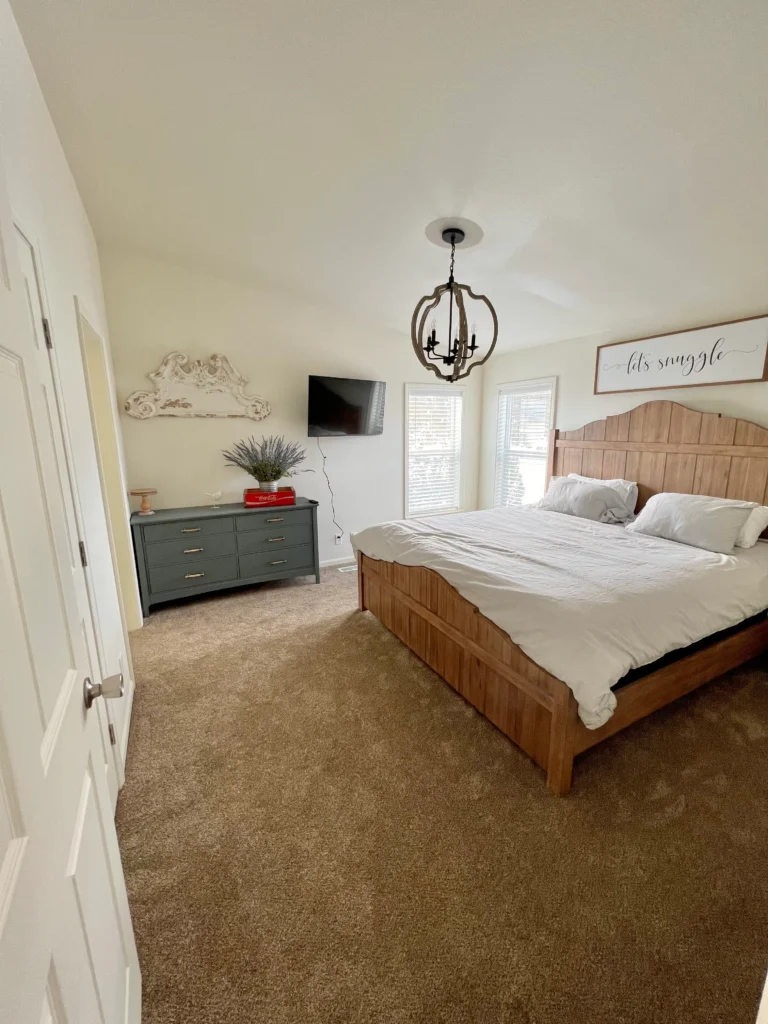
Transitional design sits deliberately between traditional and contemporary, borrowing the comfort and detail of traditional furniture with the cleaner lines and simpler palette of modern design. It’s the style people describe when they say they want “classic but not stuffy” or “modern but still cozy,” and it’s arguably the single most requested look among homeowners who can’t quite name what they want yet.
Our complete guide to transitional design covers this style in full, but the short version is that it’s one of the hardest styles to get wrong and one of the easiest to get boring, since the whole point is balance rather than a signature move. Getting it right usually comes down to restraint: one or two traditional pieces with real presence, everything else kept simple around them, rather than splitting every room evenly down the middle between old and new.
Traditional
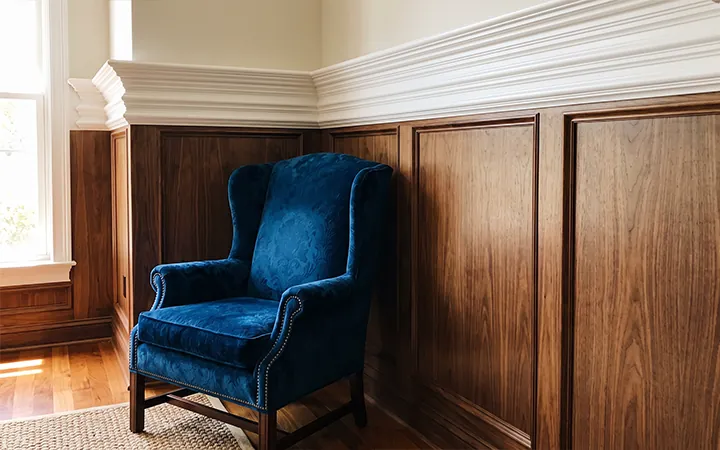
Traditional interior design draws from classic European and colonial influences: symmetry, rich wood tones, formal furniture arrangements, and detailing like crown molding or wainscoting that reads as timeless rather than trendy. Rooms are usually arranged in matched pairs, two identical chairs flanking a fireplace, rather than the asymmetrical groupings more common in contemporary spaces.
It’s a style that rewards patience and craftsmanship more than any other on this list, since the details that make it work, a properly scaled cornice, matched furniture proportions, aren’t things you can fix after the fact with a throw pillow. Homeowners drawn to traditional style are usually also drawn to quality that’s built to last decades, not seasons, and they tend to be the clients least interested in chasing a trend two years from now.
Old World and Mediterranean
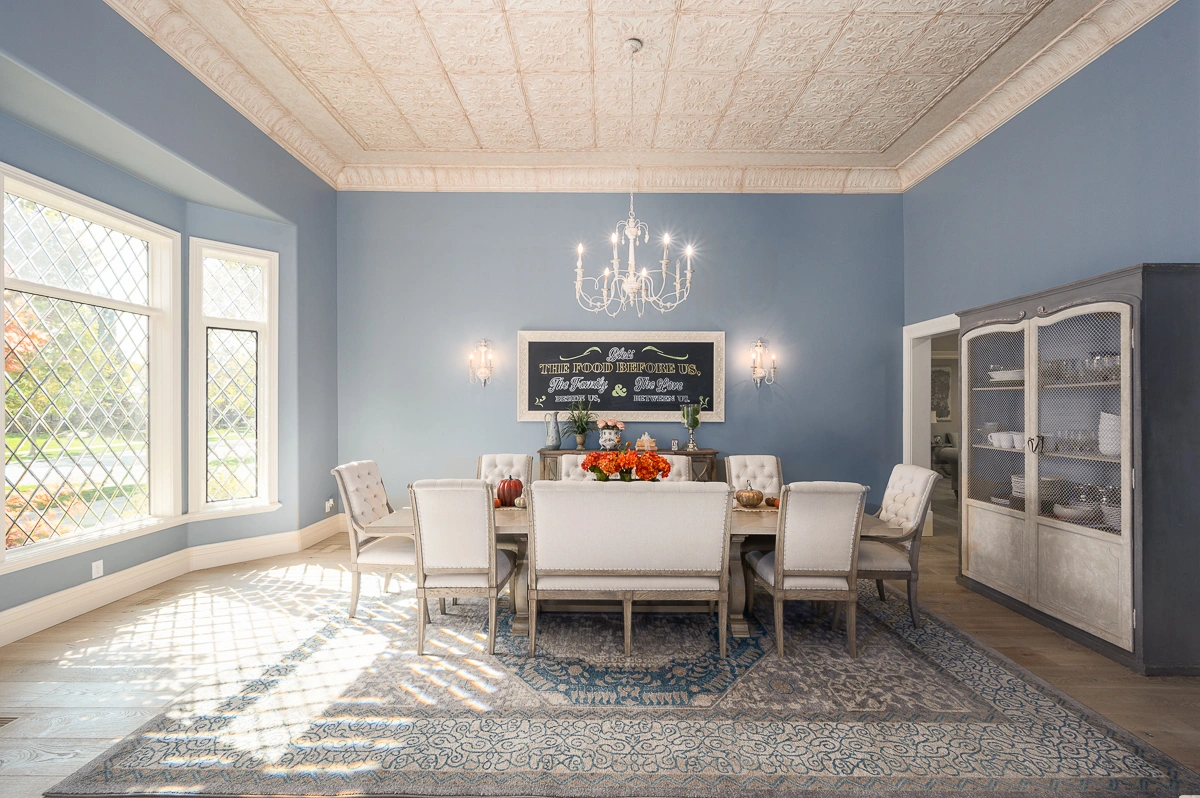
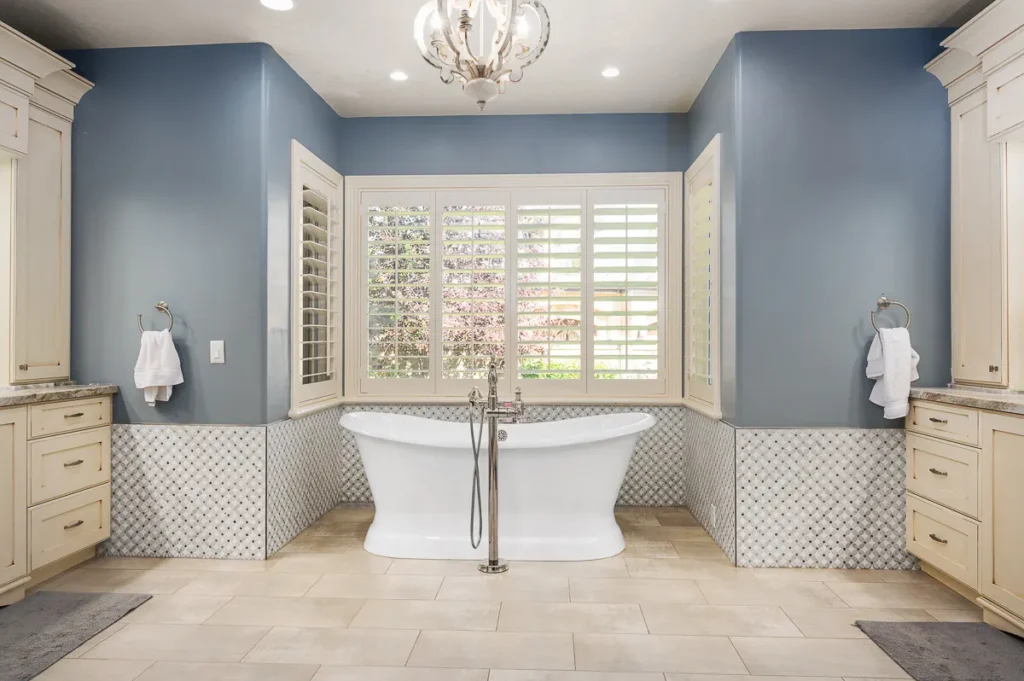
Old world and Mediterranean-influenced design borrows heavily from European villa architecture: warm plaster or stucco textures, wrought iron details, terracotta and stone, and furniture with visible age and craftsmanship rather than a factory-fresh finish. It’s one of the few styles where a slightly imperfect, hand-finished look is the goal rather than a flaw.
Lisa’s Updated Old World project is a direct example of what this looks like when it’s genuinely lived in rather than themed. The project kept the bones of an old-world aesthetic while updating the layout and finishes for how a modern family actually functions day to day, proof that old world doesn’t have to mean outdated. It’s a natural fit for many older Sarasota and Bradenton homes that were originally built with Mediterranean-influenced architecture and simply need their interiors brought current without erasing what made the house distinctive in the first place.
Rustic Industrial
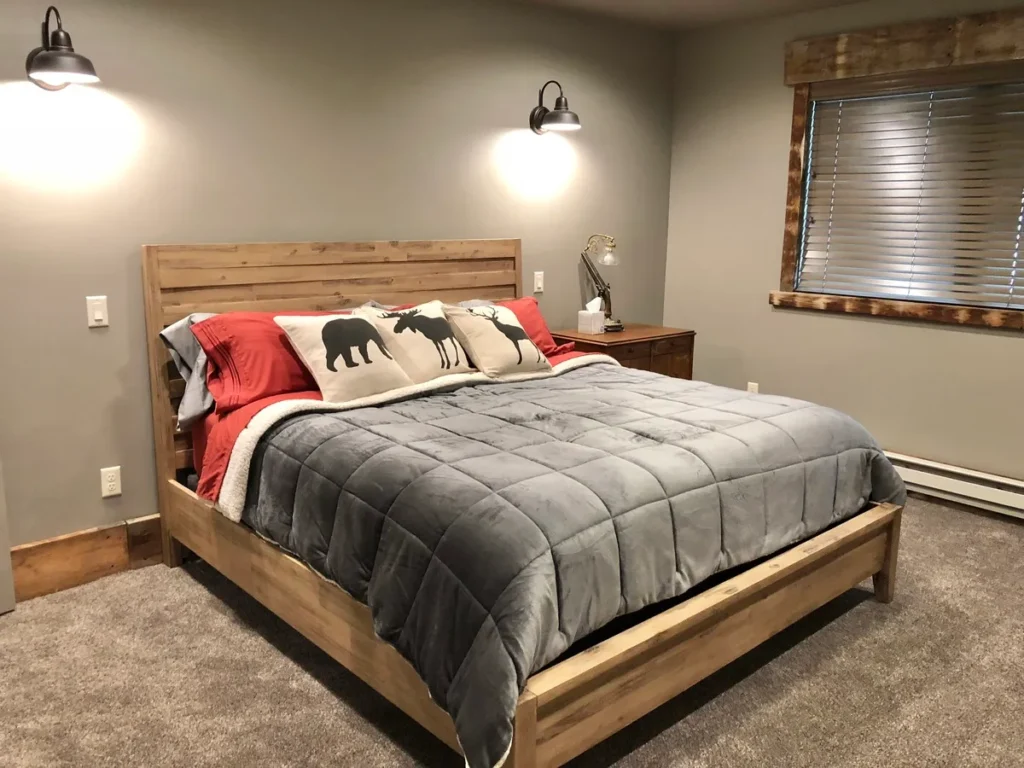
Rustic industrial pairs raw, utilitarian materials, exposed brick, black steel, reclaimed wood, with a masculine, unfinished-on-purpose aesthetic that reads as intentional rather than incomplete. Lighting tends to be exposed-bulb or cage-style fixtures, and furniture leans toward reclaimed or metal-framed pieces over anything upholstered and soft.
Lisa’s Rustic Industrial Cabin project shows the style at its most authentic: a genuine cabin setting where the materials are doing real structural work, not applied as a surface trend. This is one of the styles where Lisa’s construction background matters most, since knowing which raw materials can actually be left exposed, and which ones need to be, for safety or code reasons, covered, separates a rustic industrial home that ages well from one that becomes a maintenance headache. It suits homeowners who want their home to feel like it has a working history, even in a room built from scratch.
Contemporary and Modern
Contemporary and modern design favor clean lines, minimal ornamentation, and a restrained material and color palette, letting architecture and negative space do more of the visual work than furniture or decor. Furniture tends toward simple geometric forms, and color is usually limited to two or three tones used consistently throughout a room.
This is the one style on this list without a matching project in Lisa’s current portfolio, and it’s worth saying so plainly rather than stretching a claim. It remains a popular national search term and a style Lisa is fully equipped to execute given her range across the styles above, but her strongest, most photographed work to date leans warmer and more textural. If contemporary is genuinely your style, that’s a conversation worth having directly during a consultation rather than assumed from a portfolio that happens to lean elsewhere.
Style Snapshot: Materials and Color at a Glance
For a quick reference before you keep reading, here’s what defines each style at a glance: the materials and colors that show up most, independent of any single project. For deeper context on current material and color trends, the National Kitchen and Bath Association’s research hub tracks these shifts across the industry each year.
- Modern Farmhouse: shiplap, reclaimed wood, black metal fixtures, white and cream palette with warm gray accents.
- Farmhouse and Country: antique wood furniture, florals and gingham patterns, warm layered palette collected over time.
- Coastal: light linen and cotton, rattan and woven textures, sand and water-inspired neutrals with soft blue accents.
- Transitional: simple upholstered forms paired with one or two traditional pieces, neutral palette with restrained pattern.
- Traditional: rich wood tones, matched furniture pairs, crown molding and wainscoting, deeper jewel-toned accent colors.
- Old World and Mediterranean: stucco and plaster textures, wrought iron, terracotta and stone, warm earthy palette.
- Rustic Industrial: exposed brick, black steel, reclaimed wood, cage and exposed-bulb lighting, muted utilitarian palette.
- Contemporary and Modern: clean geometric forms, minimal ornamentation, restrained two-to-three-tone color palette.
Can You Mix Interior Design Styles?
None of the above are hard boundaries, and most of the best-designed homes borrow from two or three categories rather than committing fully to one. A modern farmhouse kitchen next to a more traditional dining room isn’t a mistake, it’s usually just how a family’s taste actually evolved room by room over several years, or how a home changed hands and each owner left something behind.
Where this goes wrong is usually a lack of a consistent thread rather than the mixing itself. A home that blends styles successfully still repeats one or two elements, a wood tone, a metal finish, a fabric texture, across every room, so the transitions feel like chapters in the same book instead of unrelated rooms under one roof.
The through-line across every style Lisa works in is the same four-phase design process and the same construction-first thinking, whether the finished look is coastal or old world. That consistency is what lets a single designer credibly execute this many different aesthetics without any of them feeling like an imitation, since the underlying decisions, traffic flow, furniture scale, material durability, don’t actually change based on which style sits on top of them.
Matching a Style to Your Home’s Existing Architecture
Florida’s older housing stock carries a lot of old world and Mediterranean influence, barrel tile roofs, arched doorways, stucco exteriors, simply because of when and how the region was originally built out. Fighting that architecture with a style that doesn’t match it, a strictly contemporary interior inside a clearly Mediterranean-influenced shell, tends to create friction between the bones of the house and what’s inside it.
Newer construction across Lakewood Ranch and the surrounding communities leans more neutral and adaptable, which is part of why modern farmhouse, transitional, and coastal all read well in newer Florida builds. The honest answer to “what style fits my house” often starts with what your house was already built to be, then layers your personal taste on top of that foundation rather than against it.
That doesn’t mean a Mediterranean-influenced house is locked into old world interiors forever. It means the arched doorways, the tile roofline, and the stucco exterior are design inputs a good plan works with rather than against, the same way Lisa reads a floor plan for load-bearing walls before deciding what’s possible inside it.
Style Mistakes That Cost More to Fix Than to Avoid
A few mistakes show up across almost every style, and they’re worth naming because they cost more to fix later than to avoid at the start.
Choosing finishes and furniture before the floor plan is finalized is the most common one. A gorgeous farmhouse dining table doesn’t matter if nobody planned enough clearance to pull out a chair, and no amount of styling saves a room whose underlying traffic flow was never actually planned in the first place. This is why space planning gets addressed on its own, separate from style, before either one gets locked in.
Choosing a style from Pinterest instead of your actual house is the second. A photo of a coastal living room shot in natural New England light won’t translate the same way into a Florida room with different window orientation, different humidity, and different architectural bones. The feeling can transfer. The exact materials and light-dependent color choices often can’t without adjustment.
Over-committing to a trend-driven version of a style is the third, and the most expensive to undo. A specific shade of farmhouse gray or a particular industrial light fixture that’s everywhere this year tends to date a room faster than the broader style itself, which is why the strongest examples in Lisa’s own portfolio lean on materials and proportions that outlast trends rather than chasing whatever’s currently popular.
Interior Design Style Questions We Hear Often
What’s the difference between modern farmhouse and traditional farmhouse style?
Modern farmhouse keeps the warm materials of classic farmhouse design, wood, neutral tones, black metal accents, but simplifies the shapes and reduces the pattern and clutter. Traditional farmhouse or country style is more layered, with florals, antiques, and a collected-over-time feel that modern farmhouse deliberately edits down.
Can I combine two different interior design styles in one home?
Yes, and it’s one of the more common real-world outcomes rather than an exception. A house that transitions from a farmhouse kitchen to a more traditional living room usually reflects how a family’s taste evolved over time, and a designer’s job is making sure the transition between rooms feels intentional rather than accidental.
Which interior design style works best for older Florida homes?
Older Florida homes often carry old world, Mediterranean, or traditional bones from when they were built, and updating them successfully usually means respecting those existing architectural details rather than fighting them with a style that doesn’t match the house’s structure.
Do I need to know my style before booking a consultation?
No. Bringing photos you like and describing how you want rooms to feel is enough to start with. Part of the in-home consultation is translating those feelings and references into an actual style direction before any design work begins.
Is coastal design only for homes near the water?
No, though it’s especially popular in Sarasota and Manatee County given the climate and lifestyle. Coastal design is really about light, breathable materials and a relaxed palette, which works in inland homes just as well as beachfront ones.
How does space planning relate to choosing a style?
Space planning always comes first, regardless of which aesthetic you choose. A beautifully styled room with a floor plan that doesn’t account for traffic flow or furniture scale will feel wrong no matter how well the finishes match the mood board, which is why we cover space planning in its own guide.
How much does it cost to get help defining or applying a design style to my home?
A single in-home consultation, $200, is usually enough to translate a vague style direction into something concrete, and that fee applies toward design fees if you move forward. A full breakdown of design fees and service tiers is covered in our interior design cost guide.
If you’re not sure which of these styles fits your home and your life, that’s exactly what an in-home consultation is for. Bring photos of rooms you love, mention the words you keep using to describe what you want, and let the conversation do the rest. Whatever you land on, the goal is a home that still feels right in ten years, not just in the after photos.