Search “luxury home renovation” and most of what comes back is either a contractor’s before-and-after gallery or a national magazine’s aspirational spread, neither of which tells you what the process actually costs or feels like from the inside. Lisa Miller has spent thirty years on the construction side of homes before spending the last several designing them, so this guide is built from what a real renovation involves, not a marketing brochure for one.
A renovation is a different animal from new construction, even a luxury one. You’re not starting from a blank set of blueprints; you’re working around a house that already has opinions, a layout that was someone else’s decision twenty or thirty years ago, plumbing and electrical that may or may not want to move where you’d like, and, usually, a family still living in some part of the home while the rest of it gets torn apart. This guide covers what counts as a luxury renovation, what it actually costs, how the process differs from building new, and a real finished project from start to finish.
What Counts as a Luxury Home Renovation
There’s no official cutoff, but in practice a luxury renovation usually means a whole-home update or a major overhaul of one or more high-use rooms, kitchen, primary bath, main living areas, on a home where the finishes, fixtures, and materials are being upgraded rather than just refreshed. Budget is the clearest signal: renovation projects at this level typically start around $50,000 and scale from there with the size of the home and the number of rooms involved.
It also tends to mean more coordination, not less. A single-room refresh might involve one or two trades. A luxury renovation touching a kitchen, multiple bathrooms, and shared living space usually means electricians, plumbers, tile setters, painters, and a general contractor all moving through the same house in a sequence that has to be planned, not improvised.
Kitchen Renovations
The kitchen is usually the single largest line item in a whole-home renovation budget, and for good reason: it’s the one room where plumbing, electrical, cabinetry, countertops, and appliances all overlap in the same footprint. A luxury kitchen renovation typically means new cabinetry, updated counters, a reworked layout for how the family actually cooks and gathers, and often moving at least one plumbing or gas line, which is the kind of change that looks simple on a mood board and is anything but simple behind the wall.
It’s also the room where “the kitchen was fine, we just wanted it to look different” and “the kitchen never worked for how we actually live” lead to very different scopes, and part of the early design conversation is figuring out honestly which one is actually true before finishes get chosen.
Primary Bath Renovations
Primary bathroom renovations carry less square footage than a kitchen but often a comparable price tag once plumbing relocation, custom tile work, and higher-end fixtures are factored in. Layout changes, moving a shower, splitting a single vanity into two, expanding a closet into the bathroom footprint, tend to be the moves that shift a primary bath renovation from a mid-size project into a genuinely luxury one.
As with kitchens, the honest starting question is whether the existing layout works and just needs new finishes, or whether the layout itself is the problem. The second answer costs more, but fixing a floor plan that’s never worked is usually a better use of a renovation budget than beautiful finishes on the same frustrating layout.
What a Luxury Home Renovation Actually Costs
Lisa bills hourly at $150 an hour and tells you the estimated hours before the project starts rather than after. Full-service design fees begin at $4,500, structured as a $750 Phase 1 retainer followed by $1,500 deposits for each of the remaining three phases. Renovation or new-construction budgets for full-service clients typically start at $50,000, and furnishing budgets typically start at $15,000, both scaling with the size of the home and how much is being sourced new versus incorporated from what you already own. For general background on planning and budgeting a renovation, the National Association of Home Builders keeps a library of consumer remodeling resources.
If a full renovation isn’t the right starting point yet, smaller engagements exist too: Designer for a Day is a flat $3,000 for direction on a single space, Consultation Hours run $1,500 for a 10-hour block for smaller decisions like tile or paint, and a single $200 in-home consultation is usually enough to find out which of those is the right fit, with that fee applied toward design work if you move forward. A full breakdown of every tier lives in our interior design cost guide.
How the Renovation Process Works
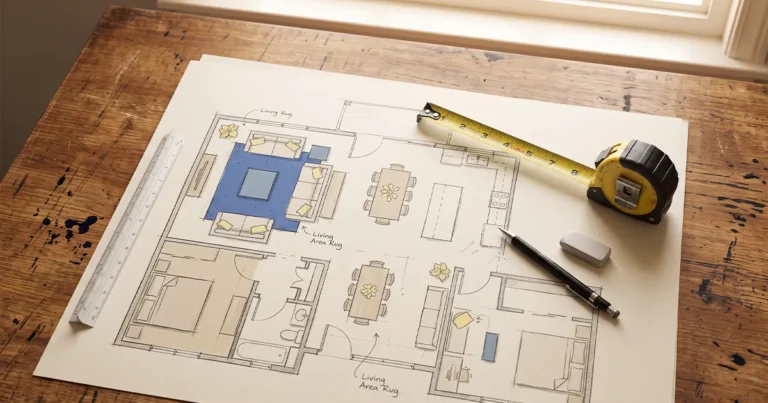
A luxury renovation runs through the same four phases as any full-service project: Concept Development, Design Documentation, Construction Period, and Furnishing and Installation. What changes in a renovation is what happens inside each phase. Concept Development starts with measuring and photographing the existing space rather than a blank floor plan, and it usually includes an honest conversation about which walls can move and which ones are load-bearing. Design Documentation carries more weight than it does in new construction, since a Fixtures, Fittings and Finishes Schedule has to account for what’s being demolished, what’s being kept, and where the two meet.
The Construction Period is where a renovation feels most different day to day. Trades are working inside a structure that already has plumbing runs, electrical panels, and load paths locked in, which means more site visits and more real-time problem-solving than a new build, where those systems are being installed fresh. For the full breakdown of what happens in each phase and how long they typically take, see our complete guide to the design process.
What’s Different About Renovating Versus Building New
New construction gives a designer a blank set of architectural drawings to work from. A renovation gives a designer a house that’s already made its decisions, some good, some dated, and the job is figuring out which ones to keep, which to fight, and which to work around entirely. That’s a different skill than styling a new space, and it’s one Lisa’s construction background is built for: knowing which wall can come down without touching a load path, and which “simple” change actually means opening drywall in three rooms to move a single vent.
Living through it is different too. Most renovation clients are staying in some part of the home while another part gets rebuilt, which means dust containment, a realistic sequence that keeps at least one working kitchen or bathroom available when possible, and weekly updates that tell you honestly where the project stands, not just when the next invoice is due. Persona research consistently shows homeowners taking on a major renovation care most about budget transparency and knowing what’s actually happening on site, which is why site visits and progress updates are built into the process rather than treated as an extra.
Renovations also surface surprises new construction doesn’t: a wall that turns out to be load-bearing once it’s opened, plumbing that isn’t where the original drawings say it is, electrical that doesn’t meet current code once it’s exposed. None of that means the project is going wrong. It means the discovery phase did its job, and a contingency built into the budget upfront, typically 10 to 15 percent of the renovation budget, is what keeps a genuine surprise from becoming a genuine problem.
Planning a Renovation Timeline in Florida
Local permitting adds time that homeowners moving from out of state or renovating for the first time often don’t budget for. A kitchen or bathroom renovation that touches plumbing or electrical typically needs permits before demolition starts, and permit review timelines in Manatee and Sarasota counties can add several weeks to a project’s start date, time that’s easy to lose if Design Documentation isn’t finished early enough to submit for permits well ahead of the planned construction start.
Hurricane season, June through November, is also worth factoring into a renovation timeline directly, not as an afterthought. Contractors and specialty trades get busier and harder to schedule in the months leading into storm season as homeowners rush to finish exterior and structural work, which can push back availability for interior renovation crews during the same window. Starting Concept Development in late fall or winter, with construction landing outside peak storm-prep demand, tends to move more smoothly than trying to start a major renovation in May.
A Real Renovation, Start to Finish
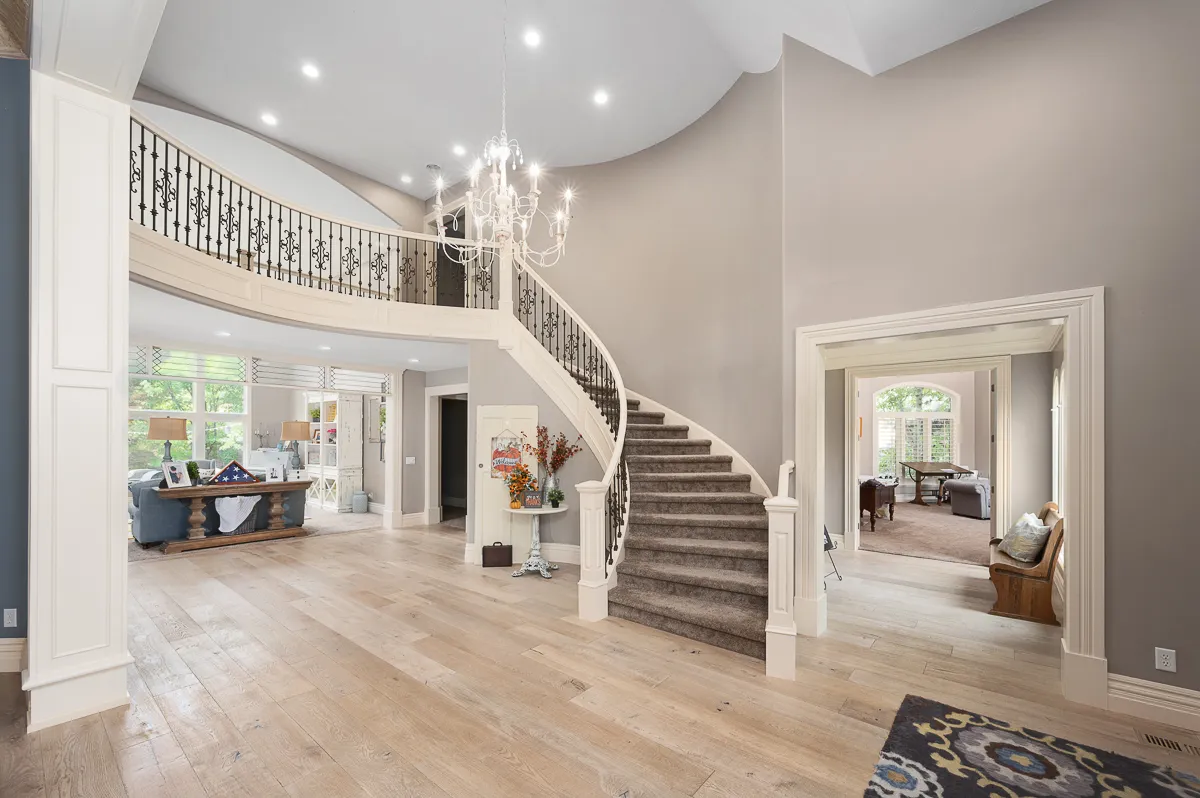
Rather than describe a hypothetical project, here’s an actual one. A homeowner came to Lisa Marie Design Co. with a 16,000-square-foot home built about 20 years earlier in an Old World style, dark wood tones, cherry hardwood floors, heavy drapery throughout, that no longer matched how the family wanted to live. The architecture itself, arched doorways, generous proportions, real craftsmanship, was worth keeping. The interior finishes were the problem.
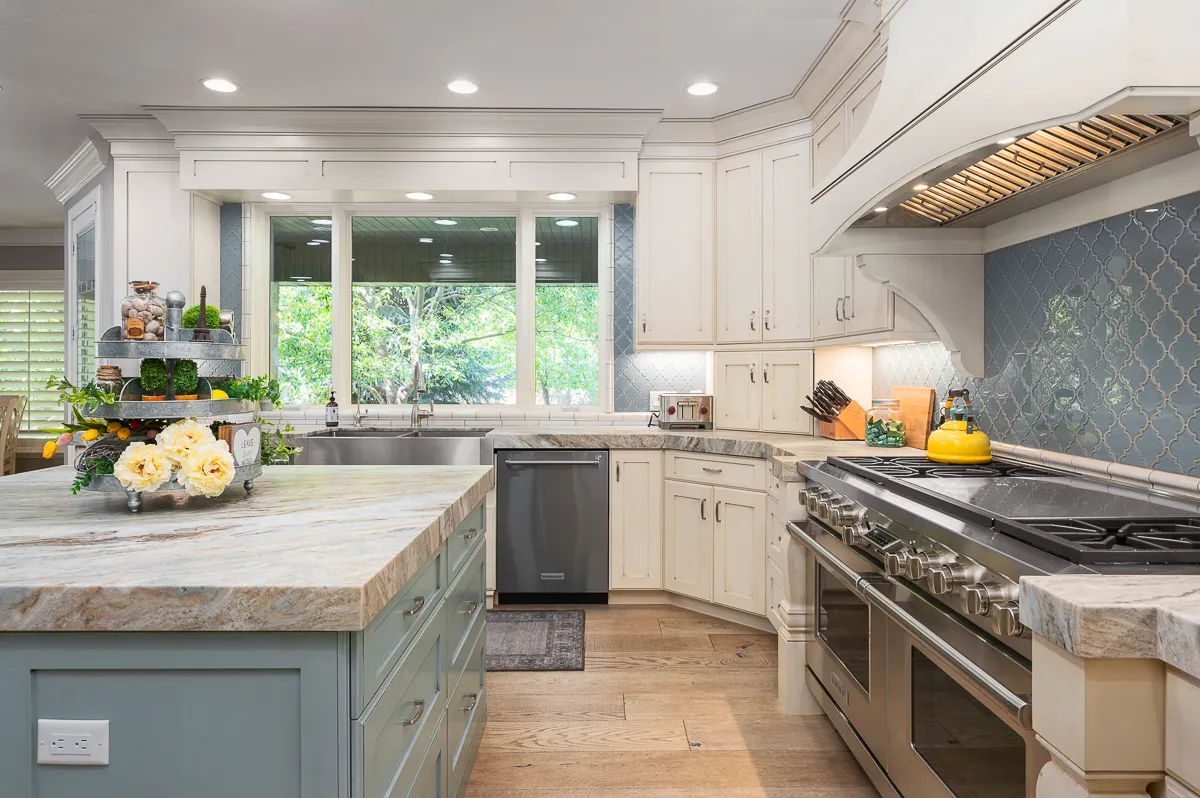
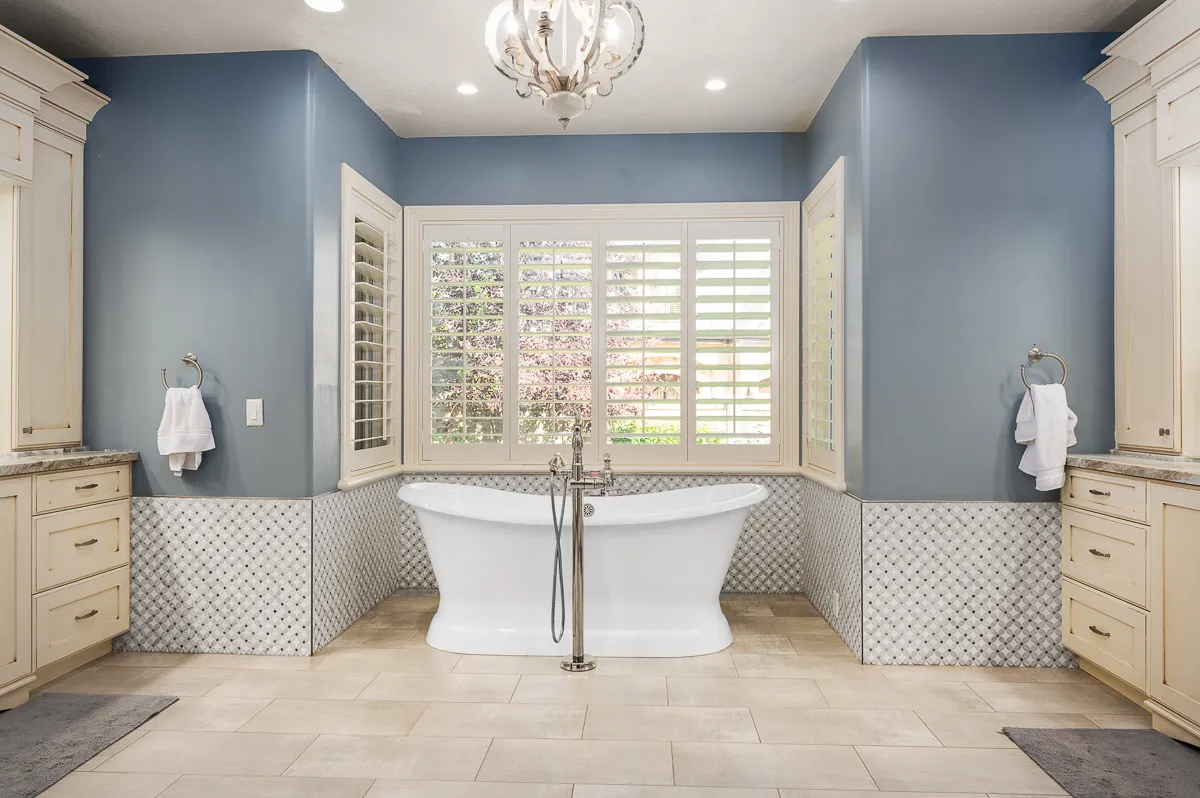
The approach kept the home’s structural bones untouched and focused the renovation budget on the rooms and finishes doing the most work: a full kitchen renovation, a hall bathroom renovation, and a primary bathroom renovation, alongside a cosmetic refresh of the shared living spaces. Dark wood elements were painted to brighten the rooms. The existing cherry hardwood and marble floors were replaced with a lighter-toned hardwood to unify the home under one palette. Heavy drapery came down in favor of plantation shutters, bringing in natural light the original design had blocked out. Lighting and plumbing fixtures were updated throughout to match the new, brighter direction.
The finished home reads as current and cohesive while still honoring the Old World architecture underneath it, proof that a luxury renovation doesn’t require tearing a house down to its studs to feel completely transformed. See the full Updated Old World project.
The lesson from this project applies beyond Old World homes specifically: a renovation budget spent on the rooms and finishes doing the most daily work, kitchen, primary bath, the shared spaces a family actually lives in, tends to produce a more complete-feeling transformation than the same dollars spread thin across every room in the house.
Luxury Renovation Mistakes That Cost More to Fix Than to Avoid
A few mistakes show up again and again on renovation projects specifically, separate from the general design-process pitfalls, and they’re worth naming before you start.
Locking in a budget before Design Documentation is finished is the most common one. Renovation costs are harder to estimate accurately than new construction because nobody knows exactly what’s behind an existing wall until it’s opened, and a budget set before that discovery happens is a guess dressed up as a number. Waiting the extra few weeks for a finished Fixtures, Fittings and Finishes Schedule before quoting a final number to a contractor almost always costs less than revising a budget mid-construction. The Consumer Financial Protection Bureau’s home-owning resources cover the basics of budgeting for a major project like this, especially if part of it is being financed.
Fighting the house’s existing architecture instead of working with it is the second. A strictly contemporary interior forced into a home with genuine Old World or traditional bones tends to create friction between the shell and what’s inside it, the same tension that shows up when style choices ignore what a house was originally built to be.
Underestimating how disruptive construction is to daily life is the third. Renovation clients who plan for a contractor to be “in and out” without accounting for dust, noise, and a working kitchen or bathroom being offline for weeks at a time are the ones most likely to feel blindsided partway through, even when the project itself is on schedule and on budget.
Luxury Home Renovation Questions We Hear Often
What counts as a luxury home renovation?
In practice, a luxury renovation usually means a whole-home update or a major overhaul of high-use rooms like the kitchen and primary bath, with a budget that typically starts around $50,000 and scales with the size of the home.
How much does a luxury home renovation cost?
Design fees run $150 an hour, with full-service projects beginning at $4,500. Renovation budgets for full-service clients typically start at $50,000, and furnishing budgets typically start at $15,000, both scaling with your home’s size and scope.
How long does a luxury renovation take?
It depends heavily on scope, but a whole-home or multi-room renovation more commonly runs several months to about a year from initial concept to final installation, since the Construction Period is tied to your contractor’s schedule and to what gets discovered once walls are opened.
Do I need a contractor before hiring a designer for a renovation?
Not necessarily. Part of Design Documentation involves finalizing the selections your contractor will need, and Lisa can recommend trades she’s worked with before if you don’t already have one in place.
Can you renovate just a kitchen or bathroom, or does it have to be a whole-home project?
Either works. Many renovation clients start with the highest-impact rooms, kitchen, primary bath, first, and some expand into a whole-home project once they see how the process goes.
What’s different about designing a renovation versus new construction?
A renovation works around an existing structure, plumbing runs, electrical, load-bearing walls, that a new build doesn’t have yet, which means more on-site discovery, more contingency planning, and usually more site visits during construction. See our guide to the design process for the full breakdown.
How do I get started on a luxury renovation?
A complimentary 15-minute phone call is the first step, followed by a $200 in-home consultation if a bigger project makes sense, with that fee applied toward design work if you move forward. Book a discovery call to get started.
When is the best time of year to start a renovation in Florida?
Late fall or winter tends to work best. Starting Concept Development then usually lands construction outside the busiest pre-hurricane-season stretch for contractors and specialty trades, when scheduling is easier and permit review isn’t competing with the same seasonal rush.
Should I budget extra for surprises once walls are opened?
Yes. A contingency of roughly 10 to 15 percent of the renovation budget is standard, since renovations regularly surface things new construction doesn’t, a wall that turns out to be load-bearing, plumbing that isn’t where the drawings say it is, once demolition actually starts.
A luxury renovation is as much about managing what already exists as it is about choosing new finishes, which is exactly where thirty years on the construction side of homes changes the outcome. That background is what turns “I hope the contractor figures it out” into an actual plan before demolition ever starts. If you’re weighing a kitchen refresh against a whole-home renovation, or you just want an honest read on budget before you start, that’s what the first conversation is for.